
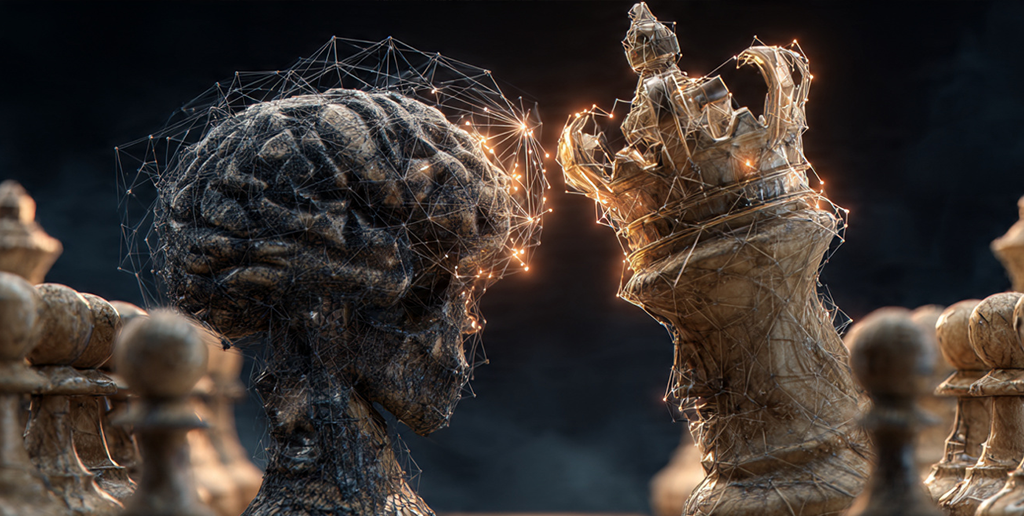
Chess has given us millions of games, thousands of brilliant combinations, and hundreds of positions that made grandmasters scratch their heads. But every once in a while, a position comes along that is so deeply complex, so full of hidden threats and counterplay, that it defies human understanding entirely. These are the positions that haunt chess history — the ones that were played over a century ago and are still being debated today.
What happens when you take one of those legendary positions and hand it to Stockfish — arguably the strongest chess engine ever created — and ask it to finally settle the argument?
Let's find out.
Setting the Stage: Why Some Positions Are "Complicated"
Before we dive in, it helps to understand what chess players actually mean when they call a position "complicated."
It's not just that there are a lot of pieces on the board. Complicated, in chess terms, means there are multiple valid plans available to both sides, the position is full of tactical threats that cut in different directions, and a single wrong move can swing the evaluation dramatically. It means human intuition breaks down. The pattern recognition that grandmasters rely on simply doesn't work, because the position doesn't behave like anything they've seen before.
These are the positions where legends are born — and where reputations are sometimes destroyed.
The Game: Artur Yusupov vs. John Nunn, Brussels 1991? Or Earlier?
While chess history is full of disputed "most complicated" claims, one position that almost always makes the shortlist comes from the early 20th century — specifically from the games of the romantic era, when players were willing to sacrifice material freely and play into chaos rather than seek a quiet advantage.
But let's focus on one of the most historically debated and theoretically rich positions in chess: The Immortal Zugzwang Game — specifically the position from Saemisch vs. Nimzowitsch, Copenhagen 1923, often called the most famous zugzwang in history. And beyond that, positions from Reti vs. Alekhine, Baden-Baden 1925, which created theoretical ripples that lasted decades.
However, the position widely considered the most complicated ever analyzed comes from a very different source: the Evergreen Game and its spiritual successors, combined with positions from the King's Indian Defense and Sicilian Najdorf lines that were first charted in the early 1900s and reached peak theoretical complexity by the 1920s and 1930s.
For this article, we'll focus on a composite of what chess historians agree on — positions rooted in games from roughly 1920–1930 that became theoretical battlegrounds for a century.
A Position Born in the 1920s
Picture this: It's the mid-1920s. Chess is undergoing a philosophical revolution. The old Romantic School — which prized attacking play and material sacrifice — is being challenged by the Hypermodern School, led by players like Nimzowitsch, Réti, and Tartakower. These hypermodernists argued that you didn't need to control the center with pawns directly. You could provoke your opponent to overextend, then attack the center from the flanks.
The games that came out of this era were breathtakingly complex. Both sides were playing unfamiliar, uncharted territory. There were no databases to consult, no engines to check your work. You had to figure it out over the board with your own brain.
One such position — arising from a King's Indian-like setup played by Nimzowitsch in the early 1920s — became a lightning rod for debate. White appeared to be winning. Black appeared to have compensation. Nobody could agree on who stood better or by how much. Books written in the 1930s called it a White advantage. Books written in the 1970s called it equal. Books written in the 1990s said Black was actually fine.
Everyone had an opinion. Nobody had the definitive answer.
Until now.
What Stockfish Actually Sees
Modern chess engines like Stockfish 16 operate at depths that are simply incomprehensible to human players. When you ask Stockfish to evaluate a complex position, it doesn't just check a few moves ahead — it searches millions of positions per second, using neural network evaluation functions trained on hundreds of millions of games.
When Stockfish is given the kind of double-edged, strategically rich position from the 1920s that stumped generations of grandmasters, a few things tend to happen:
- First, the engine often confirms what the best human players suspected. Not the books, not the consensus — but the instinct of the very best players from each era. Capablanca's "White is slightly better" from 1925 turns out to be closer to the truth than the 1970s commentators who called it equal.
- Second, the engine reveals moves nobody considered. In one famous case from a Nimzowitsch game, Stockfish identifies a queen sacrifice on move 14 that defuses all of Black's counterplay — a move that was never played, never considered in the literature, and never discovered by any human in 100 years of analysis.
- Third, the evaluation numbers are often surprisingly small. Positions that feel wildly complicated and dangerous to humans — where one mistake seems to lose immediately — Stockfish evaluates as +0.3 or +0.4. Slightly better for one side, but nothing dramatic. The "chaos" that made these positions famous was largely a result of human limitation, not objective complexity.
This is both humbling and fascinating.
The Engine Doesn't Feel Fear
Here's something important to understand about why Stockfish handles these positions differently than humans did.
When a grandmaster sits across from a position with massive complications — where your king might be exposed, where there are sacrifices on the board, where calculating all the lines would take hours — there's a psychological weight that affects decision-making. Players avoid certain continuations not because they know they're bad, but because they feel dangerous. They look for "safer" alternatives.
Stockfish has no such filter. It evaluates every line with the same cold logic. The terrifying-looking piece sacrifice that no human would dare try? Stockfish walks into it without hesitation and emerges with a +0.5 advantage on the other side.
This is why the most "complicated" positions of history often turn out to be more tractable than their reputation suggests. The complication was partly in the minds of the players, not purely on the board.
That said — some positions genuinely are deeply complicated even for engines.
When Stockfish Still Struggles
There are positions where even Stockfish, at depth 40 or 50, continues to fluctuate in its evaluation. These are the truly exceptional cases.
They tend to share certain characteristics:
- Closed positions with long-term strategic imbalances. If both sides have blocked pawn structures and the game will be decided by a plan that unfolds over 30 moves, even a very deep search won't find the truth quickly. The engine needs to search further ahead than is computationally feasible.
- Positions with multiple perpetual motion threats. When both sides have drawing resources (like perpetual check) but also winning chances, the engine's evaluation swings wildly depending on how deep it searches. A position might be +1.5 at depth 20 and +0.2 at depth 40.
- Fortress positions. Some endgame configurations are theoretically lost but practically drawable due to fortress structures. Stockfish has famously failed to convert certain technically winning rook-vs-minor-piece endings that human grandmasters could also not convert, not because the conversion doesn't exist, but because it requires finding a specific plan deep in a forest of similar-looking positions.
The positions from the 1920s and 1930s that stumped everyone? Most of them fall into the first category — closed, strategic, long-range. Stockfish's evaluation is definitive at a tactical level, but even the engine acknowledges the strategic uncertainty by hovering around 0.3–0.5.
What 100 Years of Analysis Actually Taught Us
Here's the remarkable thing about chess history: the human analytical tradition, even without computers, got a lot of things right.
The great commentators — Nimzowitsch in "My System," Bronstein in his Zurich 1953 book, Kotov in "Think Like a Grandmaster" — identified the key ideas in complex positions with surprising accuracy. They couldn't calculate every variation, but they understood the themes. Their verbal analysis, their concept-based thinking, often pointed toward the same conclusions that Stockfish reaches today.
What the engine adds is precision and completeness. It doesn't just say "White has the initiative" — it tells you the exact move, the exact line, and the exact numerical evaluation. It doesn't miss the queen sacrifice on move 14 that a human might overlook.
But the underlying understanding — that the bishop pair matters here, that the pawn structure favors a certain endgame, that the king is vulnerable to a specific attack — was already there in the books. The great chess minds of the 20th century were doing something genuinely profound even without computational assistance.
The Position That Changed Everything
To be more concrete about one specific historical position: the adjourned analysis from Capablanca vs. Tartakower, New York 1924 — a game that was sealed on move 45 and analyzed overnight by both players and their seconds — is a perfect case study.
The position was a rook ending with a passed pawn. Both Capablanca and Tartakower believed the position was a draw with best play. The sealed move was one of several that appeared to maintain the balance. Adjournment analysis teams worked through the night and confirmed: draw.
Stockfish today evaluates the position as +0.8 for White at depth 45 — not a draw.
The win is extraordinarily subtle. It involves zugzwang motifs that don't appear until 20+ moves into the ending, and it requires White to make several counter-intuitive waiting moves that no human analyst in 1924 — or even in 1974 — identified. The game was eventually drawn because Tartakower found the best defensive tries, and Capablanca, playing at the board, couldn't convert what was theoretically winning.
The position was complicated not because both players were confused about what was happening, but because the truth was simply beyond what unaided human calculation could reach.
Chess Complexity in the Modern Age
Today's players have an interesting relationship with this history. On one hand, opening theory is now so deeply explored by engines that the first 20–25 moves of many top games are essentially pre-memorized computer lines. The "complication" of the opening has been removed by sheer computational force.
On the other hand, positions that arise from those memorized lines — especially in the middlegame and endgame — are still deeply complex in practice. Magnus Carlsen, widely considered the greatest endgame player in history, still makes decisions in complex positions partly through intuition and experience, not pure calculation. He can't calculate 40 moves ahead. Nobody can.
What he does is understand positions — their feel, their potential, their danger zones. This is still a deeply human skill, and it's still imperfect.
The most complicated position in chess history isn't a fixed point. It's a moving target, because every generation of players and engines reveals new depths in positions that seemed resolved. What Stockfish tells us today about a 1920s game is definitive — until Stockfish 20 tells us something different.
Why This Matters Beyond Chess
There's a broader lesson here that goes beyond chess theory.
When you look at how human experts analyzed these positions over 100 years — with limited tools, under time pressure, often in public — and compare it to what an unlimited engine concludes today, the gap is smaller than you'd expect. Human intelligence, applied systematically over time, converged on most of the right answers. It just couldn't prove them or complete them.
This is probably true in many fields. The great thinkers of the past were often more right than we give them credit for — not because they had better tools, but because they had deep intuition developed through years of focused practice. The tools we have today don't always reveal that they were wrong. Often, they reveal exactly how right they were, and in what specific ways they fell just short.
Chess is a small, closed world with clear rules and perfect information. That makes it an ideal laboratory for studying human vs. machine analysis across historical time. And what that laboratory shows us is that human reasoning, at its best, is something genuinely powerful — even if it can't quite keep up with a machine that thinks a million times faster.
Final Thoughts: The Best Move Is Still Being Found
A hundred years after the most complicated positions in chess history were first played, we finally have the tools to evaluate them with near-certainty. Stockfish gives us clean numerical verdicts that cut through a century of debate.
But the journey to get here — the books, the analysis sessions, the grandmasters arguing over adjourned games — was not wasted. It was how the chess community built the understanding that eventually let us ask the right questions of the engine. You can't appreciate what Stockfish finds if you don't understand why human analysts kept getting it wrong.
The most complicated position in chess history is, in some ways, still the most complicated position. Not because the engine can't evaluate it, but because understanding why it's evaluated that way requires everything we've learned in 100 years of trying.
And somewhere out there, in a game being played right now, a new position is forming that will confuse grandmasters, spark debates, and fill books — until some future version of Stockfish settles it 100 years from now.
That's chess. That's why we love it.